
Emergency Operations Mobilize Heavy Logistics and Infrastructure Restoration at Disaster-Hit Gyirong Port
Documento · Archivo MR
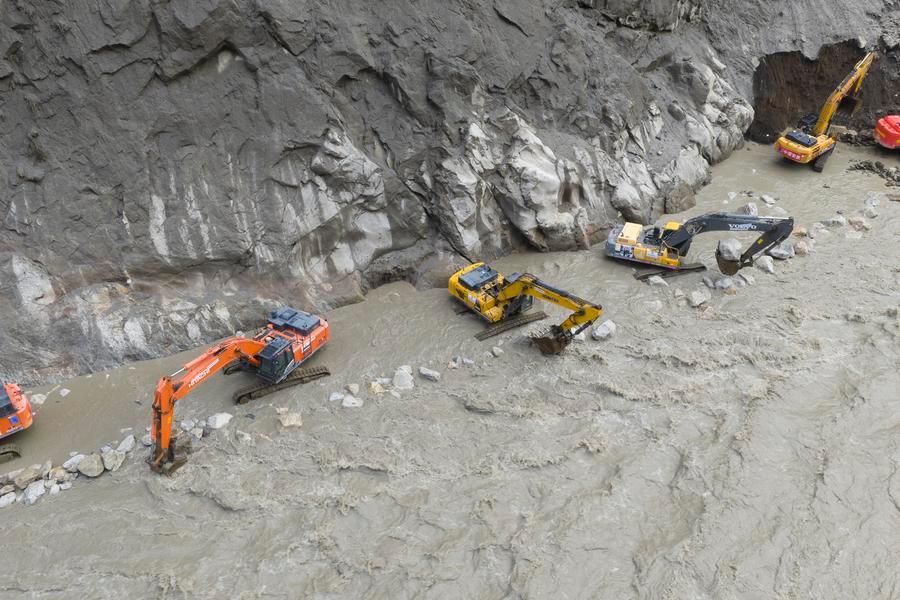
Re-establishing physical access remains the absolute bottleneck for deploying heavy machinery and heavy search equipment. Over 2,000 personnel—including specialized units from the People's Liberation Army, the People's Armed Police Force, and engineering teams from China Anneng—have been deployed to the impact zone. To clear the obstructed National Highway G216, a dedicated task force of nearly 700 road construction personnel operated heavy machinery continuously, bringing emergency vehicles to within 700 meters of the port area by Tuesday evening. Restoring this transport artery drastically alters rescue efficiency, increasing logistical throughput capacity by several hundred percent compared to early foot-based or aerial deployment methods.
Infrastructure recovery extends far beyond heavy road earthworks to include emergency telecommunications and environmental hazard mitigation. Telecom operators in Xizang deployed 12 mobile emergency base stations and restored key permanent facilities to guarantee bandwidth for real-time video feeds, satellite command setups, and operational supply mapping. Concurrently, specialized technical teams successfully drained the upstream barrier lake created by the mudslide, eliminating flash flood risks to the downstream search zones. As highlighted in coverage by People's Daily, the integration of high-resolution meteorological drone arrays and automated early-warning monitoring systems allows rescue command centers to predict local weather shifts and protect frontline search crews in real time.
This disaster also highlights the strategic importance of international relief mechanisms and border logistics management. In addition to internal rescue operations, China dispatched its second batch of emergency humanitarian aid across the Nepalese border, delivering industrial-grade water purification systems, mobile lighting rigs, genetic testing apparatus, and search drones. Deploying high-tech equipment, unified engineering standards, and robust supply chains across rugged Himalayan terrain demonstrates how modern disaster response systems convert raw operational capacity into lifesaving field outcomes under extreme alpine conditions.
News source: https://peoplesdaily.pdnews.cn/china/er/30053070444
✦
Servicio de investigación
¿Busca documentación sobre un familiar represaliado?
Nuestro equipo de historiadores localiza expedientes en archivos públicos y privados en un tiempo medio de 9 días laborables. Primera consulta sin compromiso.
Solicita tu investigación gratuita